
































Endometriosis: a study of more than one million women finds 27 new genetic regions
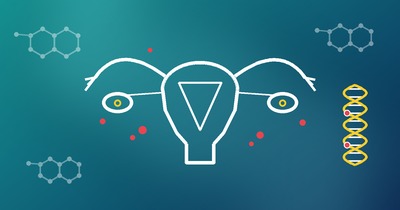
A large international study, published on 20 November 2026 in Nature Genetics, looked at the DNA of more than one million women. The researchers found 58 regions of the genome linked to the risk of endometriosis. Of these, 27 had never been described before. The work does not give us a new test yet. However, it helps us understand a common disease that doctors often recognise late.
What endometriosis is
Endometriosis is a chronic disease. Tissue similar to the inner lining of the uterus (the endometrium) grows outside the uterus. For example, it can grow on the ovaries, the fallopian tubes or the peritoneum, the membrane that lines the pelvis. According to the WHO, it affects about one in ten women of reproductive age. That is about 190 million women worldwide.
The most common symptoms are severe period pain, chronic pelvic pain, heavy periods, bloating and nausea. In addition, doctors consider endometriosis as a possible cause when a couple cannot conceive (couple infertility). However, diagnosis often takes years. In fact, people tend to play down the symptoms. Doctors then need an ultrasound scan, an MRI scan or, in doubtful cases, laparoscopy to confirm it.
The study: more than one million women in 14 biobanks
• The research is part of the Global Biobank Meta-analysis Initiative, and the Perelman School of Medicine at the University of Pennsylvania co-led it
• The US National Institutes of Health (NIH), through its institute for child health and human development, supported the study
• The genetic and health data came from 14 biobanks in several countries
• About 32% of the participants had non-European ancestry; in particular, the study included women of African and admixed American ancestry
• The researchers also used new criteria to identify cases that surgery or imaging had confirmed
• Finally, they combined the DNA data with other molecular analyses, called “multi-omics”, which describe how genes work in tissues
The results
• 58 regions of the genome are linked to the risk of endometriosis, and 27 of them are new
• Some signals appeared only thanks to women of African and admixed American ancestry; earlier studies, which mostly included European women, missed them
• The analyses point to 314 genes that may play a role in the disease
• Many of these genes control the immune system, inflammation, the response to hormones, tissue growth and the formation of new blood vessels
• Endometriosis shares genetic roots with 135 other conditions or traits; for example, anxiety, insomnia, headache, cardiovascular risk factors and metabolic traits
What this means for laboratory tests
Today no blood test can diagnose endometriosis. CA-125 can rise in women with endometriosis, but it is not specific. It also rises during periods, with pelvic inflammation and in some cancers. In addition, it can stay normal in mild disease. For this reason, it does not work as a screening test.
Laboratory tests still play a part in patient care. For example, a full blood count and ferritin help doctors spot anaemia caused by heavy periods. Anti-Müllerian hormone (AMH), instead, estimates the ovarian reserve. This helps when a woman wants to conceive or before ovarian surgery. In addition, FSH, LH, progesterone and prolactin belong to the hormone work-up for couples who cannot conceive.
The new study does not change these tests. However, the researchers believe the data can guide new non-invasive ways to estimate risk. As a result, future tools could allow earlier diagnosis and more targeted treatment.
Who should care
• Women with severe period or pelvic pain, who often wait years for a diagnosis
• Couples who are trying for a baby without success, because endometriosis is one of the causes to rule out
• Gynaecologists and fertility clinics
• Drug researchers, because the genes the study highlights are possible targets for new treatments
Limitations
• This is a genetic association study: it shows DNA regions linked to risk, but on its own it does not explain how the disease starts
• Each single variant usually changes risk only a little; therefore, no genetic test can diagnose endometriosis today
• In biobanks, the diagnosis partly comes from medical records, so the data may miss or misclassify some cases
• The 314 genes are only candidates; laboratory studies will need to confirm their role
• Many years usually pass between a genetic discovery and a new test or drug
In summary
• A study of more than one million women found 58 DNA regions linked to endometriosis, and 27 of them are new
• The genes involved mainly concern immunity, inflammation, hormones and blood vessels
• Including women of diverse ancestry led to findings that earlier studies had missed
• No blood test can diagnose the disease yet; CA-125 remains a marker with low specificity
• Overall, the study is a step towards faster diagnosis and targeted care, but more research is needed
Sources:
Nature Genetics, 20 November 2026 (Global Biobank Meta-analysis Initiative); Nature Genetics; NIH; Penn Medicine (Newswise); Medical Xpress
Laboratory tests:
Ca-125, AMH – Ormone anti mulleriano, FSH, LH, Progesterone, Prolattina, Emocromo, Ferritina, PCR Proteina C Reattiva, Genetica molecolare
Diseases, symptoms and related pages:
Terapie biologiche per l’endometriosi, Infertilità di coppia, Anemia, Check-Up Donna, Check-Up Endocrinologico, Isteroscopia Isterosalpingoscopia, Gravidanza dopo un tumore




Discussion about this post